Sarvodaya Book Stall

In Stock

A philosophical exploration of the idea of ‘rebellion’ by one of the leading existentialist thinkers, Albert Camus’ The Rebel looks at artistic and political rebels throughout history, from Epicurus to the Marquis de Sade. This Penguin Modern Classics edition is translated by Anthony Bower with an introduction by Oliver Todd. The Rebel is Camus’ ‘attempt to understand the time I live in’ and a brilliant essay on the nature of human revolt. Published in 1951, it makes a daring critique of communism – how it had gone wrong behind the Iron Curtain and the resulting totalitarian regimes. It questions two events held sacred by the left wing – the French Revolution of 1789 and the Russian Revolution of 1917 – that had resulted, he believed, in terrorism as a political instrument. In this towering intellectual document, Camus argues that hope for the future lies in revolt, which unlike revolution is a spontaneous response to injustice and a chance to achieve change without giving up collective and intellectual freedom. Albert Camus (1913-60) is the author of a number of best-selling and highly influential works, all of which are published by Penguin. They include The Fall, The Outsider and The First Man. Awarded the Nobel Prize for Literature in 1957, Camus is remembered as one of the few writers to have shaped the intellectual climate of post-war France, but beyond that, his fame has been international. If you enjoyed The Rebel, you might like Camus’ The Fall, also available in Penguin Modern Classics.

Author:

₹399.00

Guarantee Safe & Secure Checkout
Brand:

Description

‘My mother died today. Or maybe yesterday, I don’t know.’

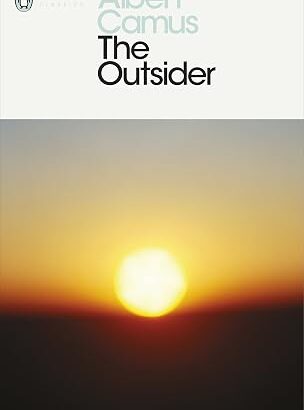
In The Outsider (1942), his classic existentialist novel, Camus explores the alienation of an individual who refuses to conform to social norms. Meursault, his anti-hero, will not lie. When his mother dies, he refuses to show his emotions simply to satisfy the expectations of others. And when he commits a random act of violence on a sun-drenched beach near Algiers, his lack of remorse compounds his guilt in the eyes of society and the law. Yet he is as much a victim as a criminal.

Albert Camus’ portrayal of a man confronting the absurd, and revolting against the injustice of society, depicts the paradox of man’s joy in life when faced with the ‘tender indifference’ of the world.

Sandra Smith’s translation, based on close listening to a recording of Camus reading his work aloud on French radio in 1954, sensitively renders the subtleties and dream-like atmosphere of L’Étranger.


Reviews

There are no reviews yet.

Be the first to review “A philosophical exploration of the idea of ‘rebellion’ by one of the leading existentialist thinkers, Albert Camus’ The Rebel looks at artistic and political rebels throughout history, from Epicurus to the Marquis de Sade. This Penguin Modern Classics edition is translated by Anthony Bower with an introduction by Oliver Todd. The Rebel is Camus’ ‘attempt to understand the time I live in’ and a brilliant essay on the nature of human revolt. Published in 1951, it makes a daring critique of communism – how it had gone wrong behind the Iron Curtain and the resulting totalitarian regimes. It questions two events held sacred by the left wing – the French Revolution of 1789 and the Russian Revolution of 1917 – that had resulted, he believed, in terrorism as a political instrument. In this towering intellectual document, Camus argues that hope for the future lies in revolt, which unlike revolution is a spontaneous response to injustice and a chance to achieve change without giving up collective and intellectual freedom. Albert Camus (1913-60) is the author of a number of best-selling and highly influential works, all of which are published by Penguin. They include The Fall, The Outsider and The First Man. Awarded the Nobel Prize for Literature in 1957, Camus is remembered as one of the few writers to have shaped the intellectual climate of post-war France, but beyond that, his fame has been international. If you enjoyed The Rebel, you might like Camus’ The Fall, also available in Penguin Modern Classics.”

Your email address will not be published. Required fields are marked *

A philosophical exploration of the idea of 'rebellion' by one of the leading existentialist thinkers, Albert Camus' The Rebel looks at artistic and political rebels throughout history, from Epicurus to the Marquis de Sade. This Penguin Modern Classics edition is translated by Anthony Bower with an introduction by Oliver Todd.  The Rebel is Camus' 'attempt to understand the time I live in' and a brilliant essay on the nature of human revolt. Published in 1951, it makes a daring critique of communism - how it had gone wrong behind the Iron Curtain and the resulting totalitarian regimes. It questions two events held sacred by the left wing - the French Revolution of 1789 and the Russian Revolution of 1917 - that had resulted, he believed, in terrorism as a political instrument. In this towering intellectual document, Camus argues that hope for the future lies in revolt, which unlike revolution is a spontaneous response to injustice and a chance to achieve change without giving up collective and intellectual freedom.  Albert Camus (1913-60) is the author of a number of best-selling and highly influential works, all of which are published by Penguin. They include The Fall, The Outsider and The First Man. Awarded the Nobel Prize for Literature in 1957, Camus is remembered as one of the few writers to have shaped the intellectual climate of post-war France, but beyond that, his fame has been international.  If you enjoyed The Rebel, you might like Camus' The Fall, also available in Penguin Modern Classics.
You're viewing: A philosophical exploration of the idea of ‘rebellion’ by one of the leading existentialist thinkers, Albert Camus’ The Rebel looks at artistic and political rebels throughout history, from Epicurus to the Marquis de Sade. This Penguin Modern Classics edition is translated by Anthony Bower with an introduction by Oliver Todd. The Rebel is Camus’ ‘attempt to understand the time I live in’ and a brilliant essay on the nature of human revolt. Published in 1951, it makes a daring critique of communism – how it had gone wrong behind the Iron Curtain and the resulting totalitarian regimes. It questions two events held sacred by the left wing – the French Revolution of 1789 and the Russian Revolution of 1917 – that had resulted, he believed, in terrorism as a political instrument. In this towering intellectual document, Camus argues that hope for the future lies in revolt, which unlike revolution is a spontaneous response to injustice and a chance to achieve change without giving up collective and intellectual freedom. Albert Camus (1913-60) is the author of a number of best-selling and highly influential works, all of which are published by Penguin. They include The Fall, The Outsider and The First Man. Awarded the Nobel Prize for Literature in 1957, Camus is remembered as one of the few writers to have shaped the intellectual climate of post-war France, but beyond that, his fame has been international. If you enjoyed The Rebel, you might like Camus’ The Fall, also available in Penguin Modern Classics. ₹399.00
Add to cart
Select the fields to be shown. Others will be hidden. Drag and drop to rearrange the order.
  • Image
  • SKU
  • Rating
  • Price
  • Stock
  • Availability
  • Add to cart
  • Description
  • Content
  • Weight
  • Dimensions
  • Additional information
Click outside to hide the comparison bar
Compare
Shopping cart close